
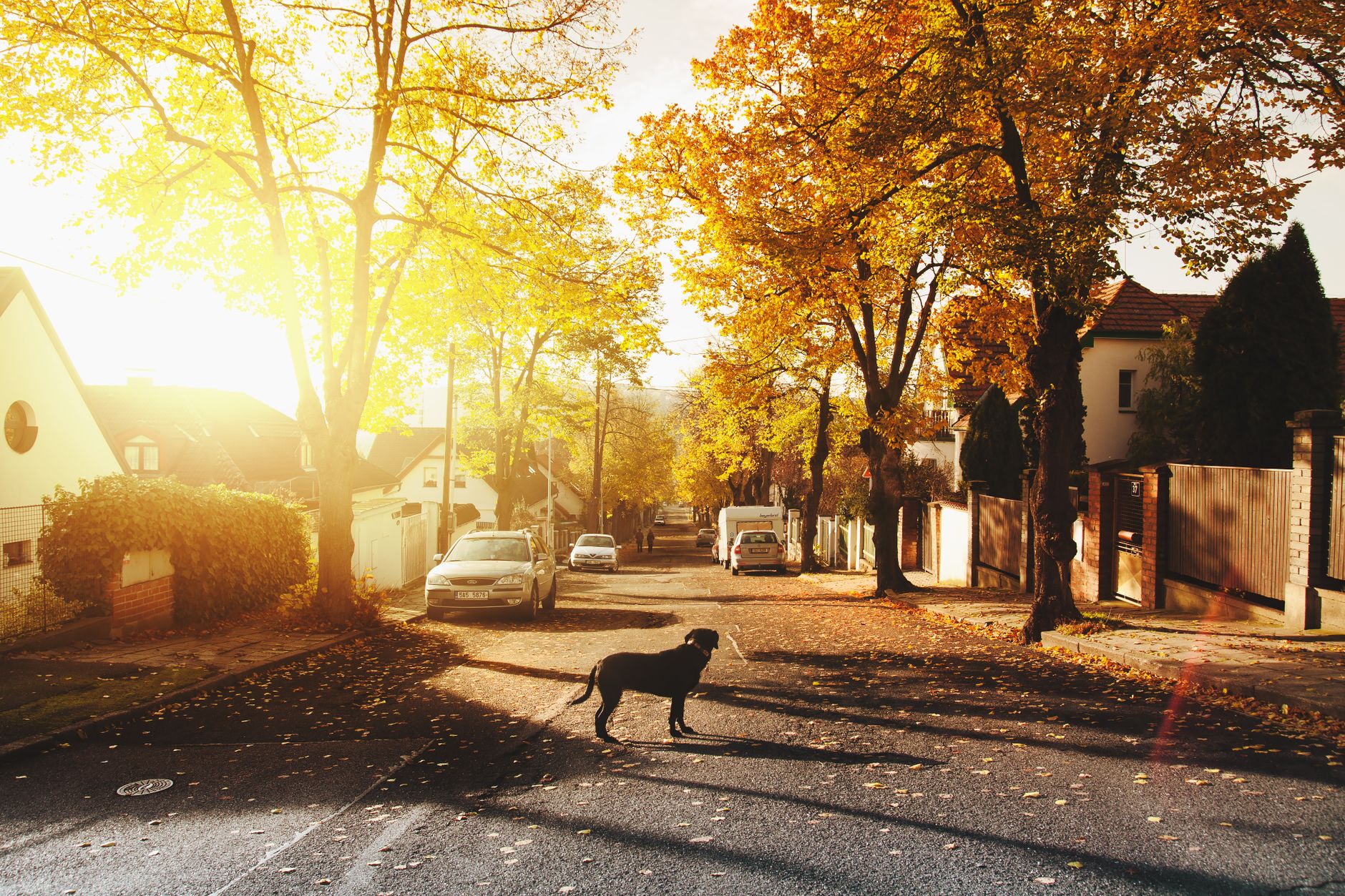
Nanaimo lives with black-tailed deer the way other cities live with pigeons. They are on the lawns, along the trails, and in the middle of quiet streets at dusk. For most of the year they are a non-event. From late October through December they are not, and the reason is the rut.
The animals that cause trouble in these weeks are not frightened. They are bold, distracted and willing to come at you.
What changes in the rut
Through the breeding season bucks are flooded with hormone, moving constantly, competing with each other, and far less bothered by people and dogs than they are in August. A buck who would have drifted away from you in summer may now stand his ground, stamp, flatten his ears and walk towards you.
The important part for a dog owner is this: deer do not see a dog as a dog. They see a predator shape, and in the rut their response to a predator shape is often to attack it rather than run from it. Conservation officers in this province are explicit that dog owners need to be especially careful, and there are documented cases on Vancouver Island of dogs being seriously injured and killed by bucks in yards and on walks.
A doe is a separate matter and a separate season. Does defend fawns in spring and early summer, and they do it with their front hooves. Bucks in autumn use antlers.
The injuries we see
Deer injuries are deceptive, and this is the part worth knowing before you decide whether to come in.
An antler makes a puncture. On the outside it can be a small hole the size of a pencil, easily hidden under a thick coat, with very little blood. Underneath, the tine has travelled a long way and carried dirt and bacteria in with it. Chest punctures can let air into places it does not belong, abdominal punctures can damage organs, and the hole in the skin tells you almost nothing about either.
Hooves cause crushing and bruising rather than punctures, and a trampled small dog can have broken ribs or internal bleeding with barely a mark showing.
Any dog that has been struck by a deer should be seen the same day, even if you cannot find a wound. This is not a wait-and-see injury.
Walking through the rut
- Leash, through these weeks, in the places deer actually are. Conservation officers say nearly every aggressive deer encounter in this province involves a dog, and an off-leash dog running at a buck is the worst version of it.
- Scan before you step out. Deer bed down in yards overnight. Look at the lawn and down the side of the house before you let the dog out, especially in the dark.
- Give a wide berth. If you can see a buck, add distance. Crossing the road is not an overreaction.
- Do not walk between a buck and a doe, or between any two deer that are interested in each other.
- Read the warning. Ears back, head low, stamping a front foot, hair up along the back, walking stiffly towards you. That is a deer telling you it is about to commit.
- If one comes at you, put something solid between you. A car, a tree, a fence. Back away slowly, facing it rather than turning and running, avoid eye contact and keep your voice low. We would also pick up a small dog if you safely can. If a deer actually connects, stay on your feet, protect your head with your arms and get to shelter.
- Do not feed deer. It is why some of them have lost all caution, and in Nanaimo it is against the City’s Animal Responsibility Bylaw.
- Mind the dusk walk. Deer move most at dawn and dusk, which in November is exactly when most people walk their dogs.
If your dog has been struck
Get the dog away from the deer first; a buck may not be finished. Do not chase the deer off yourself if it is still engaged, and do not put yourself between them.
Then: keep your dog as still as you can, carry them if they are small enough, apply gentle pressure to anything that is bleeding, and call us on the way. Do not clean or probe a puncture at home and do not pull anything out of a wound. Part the coat and look over the whole dog, including the chest, the armpits, the belly and the inside of the back legs, because that is where punctures hide.
On arrival we assess breathing and circulation first, because chest injuries are what cause trouble in the first hour. Radiographs show air or fluid where it should not be and any broken ribs, and our same-day and emergency care finds the punctures the coat is hiding. Deep or contaminated wounds usually need exploring, flushing and closing properly under anaesthetic, which is soft tissue surgery rather than a bandage, because a puncture closed over dirt becomes an abscess within days.
Our hours
We are open Monday to Friday from 8:00 am to 7:00 pm and Saturday and Sunday from 9:00 am to 5:00 pm.
Deer move most at dawn and dusk. Through November the sun goes down between about 5:20 and 5:55 pm, so weekday evenings are still inside our hours. The gap is the weekend, when we close at 5:00 pm and dusk falls after that.
If your dog is struck after we close, phone ahead before you drive. Overnight emergency coverage in Nanaimo is not available every night, so confirm someone is open and expecting you rather than arriving at a locked door. Do not wait for the morning. A chest puncture is not something to sleep on.
Common questions
The deer in my street have always been calm. Why would this year be different?
It is not the year, it is the weeks. The same animals that ignored you in September behave differently once the rut starts in late October, and they stay that way into December.
My dog barked at a buck and it charged. Is that normal?
Yes, and it is the usual sequence. A barking, lunging dog reads as a predator making a move, and in the rut the answer is frequently to come forward rather than back off.
My dog has a small puncture but is bright and eating. Can it wait?
No. Small punctures are exactly the ones that matter, because the surface wound bears no relation to the depth. Same day, please.
Is there anything that keeps deer out of a yard?
Proper fencing works; sprays and noise devices mostly do not for long. Removing fallen fruit and not feeding them makes a yard less interesting.
When does the risk drop off?
Later than most people expect. Mid-November is the peak, not the end of it, and the risk stays high into December before settling as the rut finishes. Spring brings a different one, when does with new fawns become defensive.
Speak to the team at Coastal City Animal Hospital
If your dog has been struck or trampled by a deer, bring them in the same day, even with no visible wound. Call ahead so we can be ready for you.
Published by the team at Coastal City Animal Hospital.
This article is educational in nature and is not a replacement for hands-on assessment of your own pet by a veterinarian.
Coastal City Animal Hospital
#105, 1849 Dufferin Crescent, Nanaimo, BC V9S 0B1
Phone: (778) 441-3989
Hours: Monday to Friday 8:00 am to 7:00 pm; Saturday and Sunday 9:00 am to 5:00 pm