 Skip to content
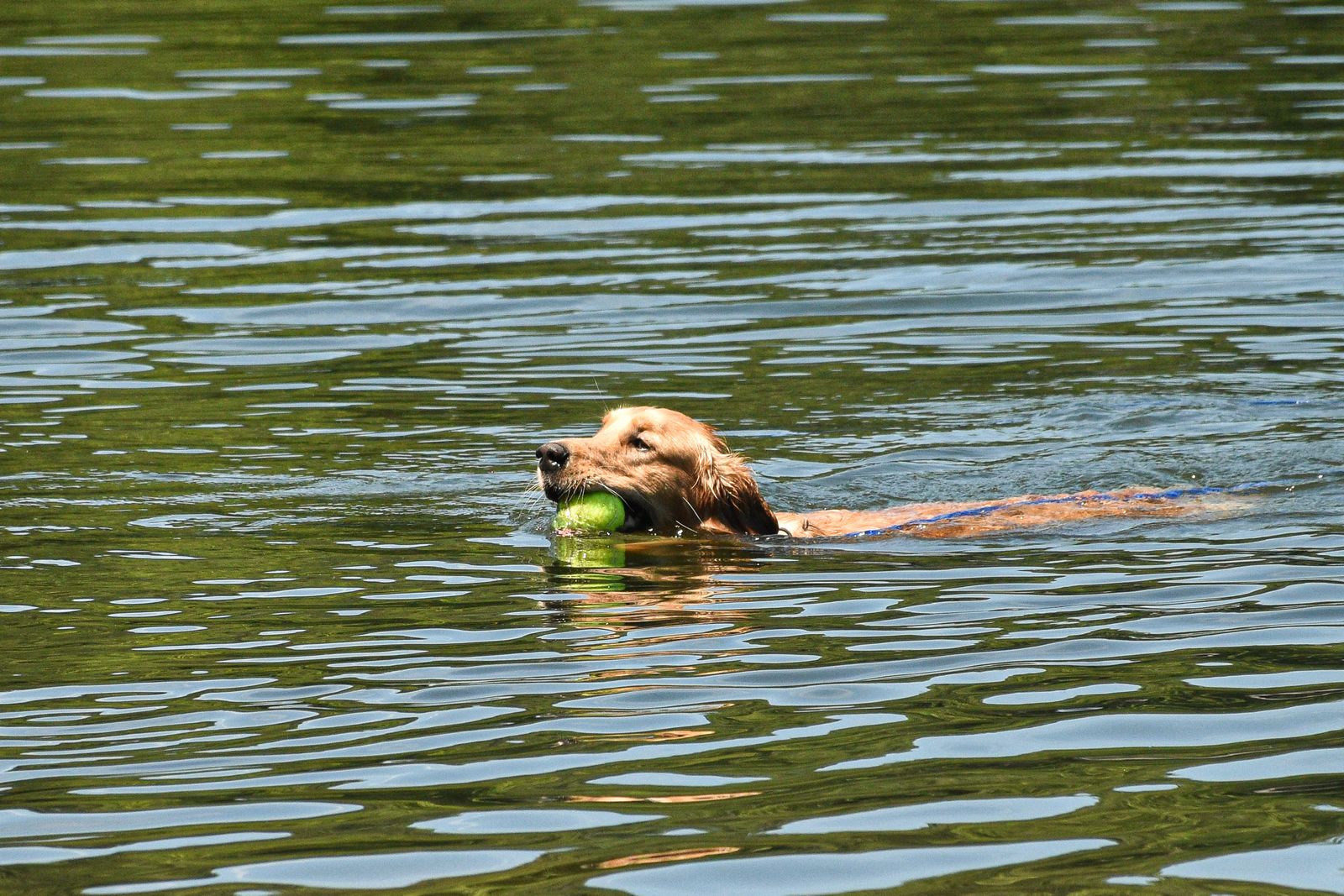
Swimming is great exercise for dogs, but Nanaimo’s lakes and beaches carry a few summer risks. Avoid water with scummy green film, which can signal toxic blue-green algae, rinse salt water off after ocean swims, offer fresh drinking water often, and stop your dog from scavenging dead fish along the shoreline. Call a veterinarian quickly if illness follows a swim.
Few dogs are luckier than Nanaimo dogs in July. Within a short drive there are lakes for retrieving, rivers for wading, and ocean beaches for full-speed zoomies. Water play is wonderful exercise and a great way to keep cool, but the shoreline comes with a handful of hazards that are worth knowing before your dog’s next swim. Here is what our Nanaimo team wants local dog owners to keep in mind this summer.
Blue-Green Algae: The Hazard That Looks Like Pond Scum
Warm, still, nutrient-rich water can grow blooms of cyanobacteria, commonly called blue-green algae, and some blooms produce toxins that are dangerous to dogs in very small amounts. Blooms often look like pea soup, spilled paint, or a scummy blue-green or brownish film near the water’s edge, but you cannot tell a toxic bloom from a harmless one by looking. Dogs are especially at risk because they drink while swimming and lick their wet coats afterward.
The safe rule: if the water looks scummy, discoloured, or smells foul, or if a local advisory has been posted, keep your dog out entirely. If your dog does swim in or drink suspect water, rinse them off with clean water right away and call a veterinary team immediately rather than waiting. Vomiting, drooling, weakness, stumbling, or seizures after lake time are an emergency, and with algae exposure the window to act is short. Our urgent care team sees same-day cases seven days a week for exactly these situations.
Saltwater Beaches: Sand, Salt, and Sun
Ocean outings around spots like Departure Bay bring their own list. The big one is saltwater ingestion. A few mouthfuls while fetching is usually just a recipe for loose stool, the classic beach diarrhea, but larger amounts can cause vomiting and dangerous shifts in hydration, so bring fresh water and offer it every fifteen or twenty minutes so your dog is not tempted to drink from the ocean. Repeated ball-chasing into the surf is the usual culprit, so build in rest breaks. Sand can cause trouble too when dogs swallow it along with a sandy ball; large amounts can irritate or even block the gut. And after every ocean swim, rinse the salt out of the coat and check the paws, since salt and sand are drying and itchy when left in.
Fresh Water Is Not Risk-Free Either
At lake spots such as Westwood Lake, the water itself is gentler than the ocean, but two things are worth knowing. First, lakes and streams can carry parasites such as giardia, which is one more reason to keep parasite prevention current through the summer; our post on parasite prevention for pets in Nanaimo and across Vancouver Island covers this in detail. Second, obsessive retrievers that swallow water with every grab of the ball can, on rare occasions, take in enough to dilute their blood sodium, a condition called water intoxication. It is uncommon, but wobbliness, bloating, vomiting, or dullness after a long retrieving session is urgent. The fix is simple: use a flat toy rather than a round ball in the water, and enforce breaks.
Shoreline Scavenging and Salmon Poisoning Disease
Beaches and riverbanks collect interesting smells, and dogs investigate with their mouths. Dead fish deserve particular respect on Vancouver Island: raw salmon, trout, and related fish can carry an organism that causes salmon poisoning disease in dogs, an illness that can turn serious without treatment. Vomiting, diarrhea, fever, and swollen lymph nodes in the days after a beach or river trip warrant a prompt exam, and it helps to mention any scavenging you saw. When the history and exam point that way, pet diagnostics such as bloodwork and fecal testing help the veterinarian understand what is going on. A reliable leave-it cue is honestly one of the best pieces of safety equipment a beach dog can have.
A Good After-Swim Routine
Rinse the coat with clean water, towel dry, and check paws and between toes for cuts from shells, barnacles, or hidden glass. Dry the ears gently, since dogs that swim frequently, especially floppy-eared breeds, are prone to ear infections; head shaking, scratching, or a yeasty odour in the days after swimming is worth a visit, and our medical services team treats swimmer’s ears all summer long. Finish with fresh drinking water and shade, and keep an eye on energy and appetite for the rest of the day. Remember that water play does not make a dog heat-proof; on hot afternoons, the walk to and from the water can be the riskiest part, and our earlier guide on preventing heatstroke in pets during hot summers pairs well with this one.
Frequently Asked Questions
Can my dog drink lake water?
It is best if they do not. Lake water can carry parasites and bacteria, and in bloom season it may contain algae toxins. Bring fresh water to every outing and offer it often, which is the most effective way to stop opportunistic drinking.
How do I know if algae in the water is the dangerous kind?
You cannot tell by looking, and that is the point to remember. Treat any scummy, discoloured, or foul-smelling water as suspect, watch for posted advisories in the Nanaimo area, and when in doubt choose a different spot for the day.
My dog vomited after a swim. Should I wait and see?
Call right away rather than waiting, and mention where your dog swam and what they may have eaten or drunk. Vomiting after water play has many mild causes, but it is also the first sign of the serious ones, including algae exposure and salmon poisoning disease, and early treatment makes a real difference.